
Theater Is changing
Artists have long used the stage to question power, challenge social norms and tell stories that are often ignored. This season, two productions at CAP UCLA carry that tradition into the present.
“What connects Catarina and Cuervo is that both come from artists who inherited the memory of, dictatorship, and who decided that the theater stage was where they could process and think it through,” says Executive and Artistic Director Edgar Miramontes.
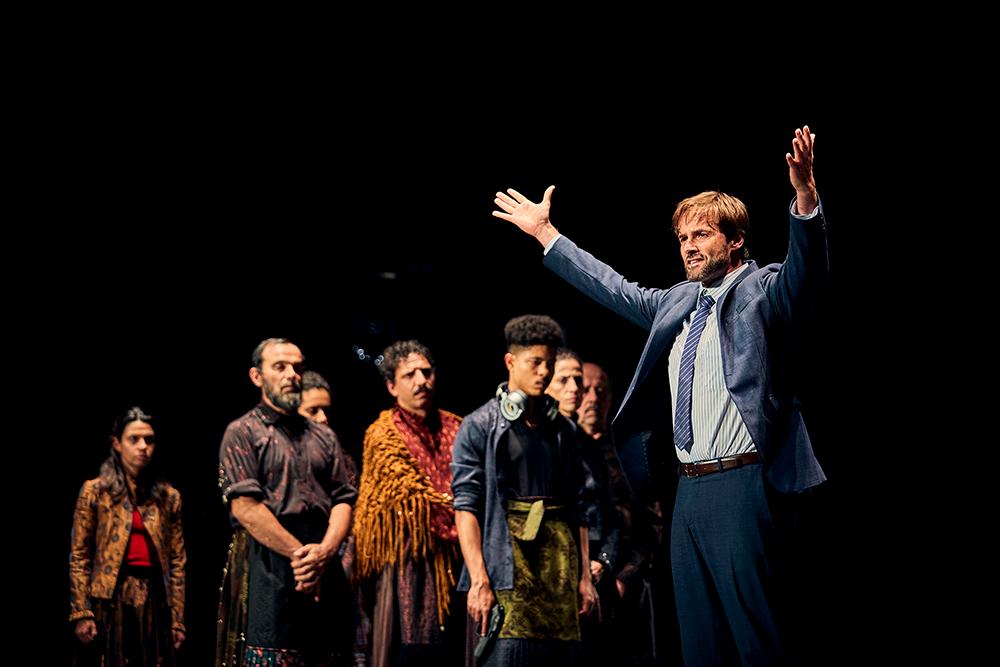
In Tiago Rodrigues’s Catarina, a Portuguese family commemorates the 1954 murder of activist Catarina Eufémia by the Salazar dictatorship by kidnapping and killing a fascist. The play asks whether democracy can be defended by violating its own principles.
“It is not a comfortable play,” says Miramontes. “[Rodrigues] doesn’t answer it for us, and that’s exactly why I wanted Los Angeles audiences in the room with it right now. We’re living through a time when people of every political persuasion feel democracy is under threat, and this play asks us to sit with what we might be willing to do about it.”
Cuervo approaches power from the other side: through the eyes of the person who survives it. Brothers Cosme and Óscar Castro bring to the stage the unpublished theatrical autobiography of their late father, Chilean playwright and director Óscar “Cuervo” Castro, who was arrested and taken to Chile’s concentration camps. Drawings, shadows and footage the brothers filmed in Chile decades later bring his story to life.
“Their father kept making theater in the camps,” says Miramontes. “That fact says something essential: in crisis, art isn’t a luxury. It’s how people hold on to their humanity, their memory and each other.”
“Catarina is a provocation and Cuervo is a testimony,” he says. “Clearly, there is a future, and this, too, shall pass. The question these works pose is: What do we want that future to look like?”
We invite you to explore that question with us.